 Bloomington Pest Control ProsLocal · Trusted · Same-DayBloomington Pest Control ProsLocal · Trusted · Same-Day
Coordinated pest control for Bloomington rental properties — single units to multi-building portfolios. Move-in and move-out inspections, recurring service plans, and written documentation for landlord records.
Get a Free Inspection
Bloomington's rental market has a structural pest pressure problem. With roughly 47,000 Indiana University students cycling through off-campus apartments every year, the August move-in and May move-out seasons create near-constant tenant turnover — and with that turnover comes constant reintroduction of pests.
The older housing stock compounds the problem. Buildings in Bryan Park, Elm Heights, and the IU-adjacent corridors on East 3rd, Atwater, and East 10th commonly have pre-1980 construction: crawl spaces with unscreened vents, aging sill plates with foundation gaps, and pipe penetrations sealed with degraded putty. A property treated in one unit but not adjacent ones is almost certain to see recurrence within six to eight weeks.
Landlords are legally required to deliver and maintain rental premises in a safe, clean, and habitable condition. A pest infestation — including bed bugs, cockroaches, or rodents — can constitute a habitability violation. Landlords who receive a pest complaint and fail to take reasonable corrective action can face tenant remedies including rent withholding, repair-and-deduct claims, or lease termination rights under IC 32-31-8-6.
We provide written service reports after every visit, documenting what was inspected, what was found, what was treated, and with what products. These reports are formatted for landlord record-keeping and can be provided to tenants, property management companies, or Monroe County Health Department upon request. For a tenant-facing overview of these habitability rights, see our Indiana Renter Rights guide.
This is the single most common mistake Bloomington landlords make: paying for a bed bug or cockroach treatment in one unit while adjacent units go uninspected. Bed bugs travel through shared walls via electrical outlets, pipe chases, and conduit gaps. German cockroaches migrate through plumbing stacks and under door sweeps. A treated unit that shares a wall with an untreated active infestation will be reinfested within weeks.
When we respond to a pest complaint in a multi-unit building, our process is: treat the reported unit, inspect all directly adjacent units (same floor, units above and below), and provide a written assessment of the building's overall pest status.
Free building assessment · Same-day scheduling · Written reports for every visit
Call (812) 445-8655The two highest-risk moments in a Bloomington rental unit's pest history are move-out and move-in. A professional inspection at both transition points creates a clear record of the unit's condition and stops problems before they start.
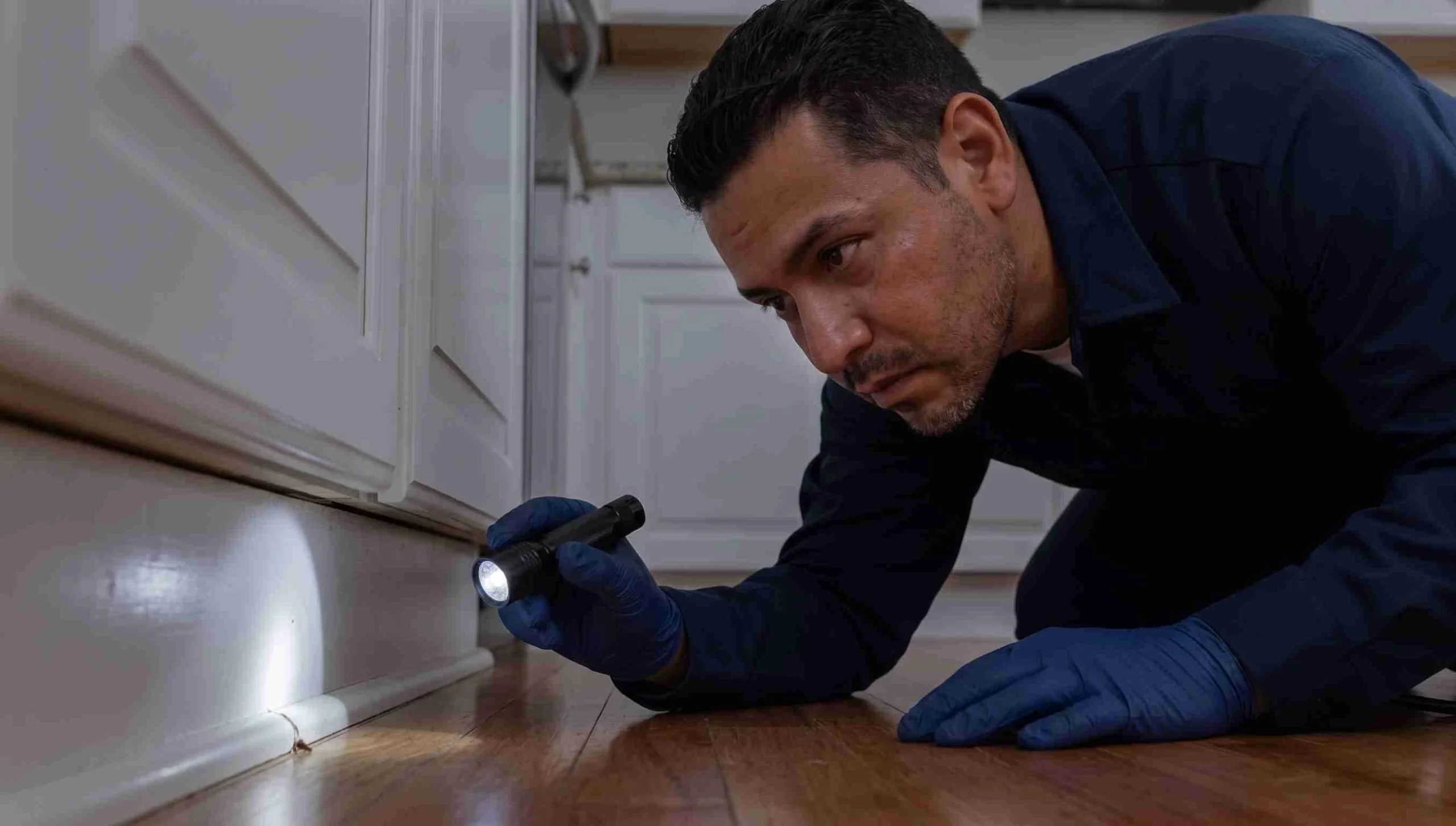
Our move-out inspection covers bed bug harborage sites, signs of rodent activity, cockroach evidence, and general pest conditions. The written report includes photographs and a pass/fail assessment. Move-in inspections are available with 48 hours' notice — book them in mid-July for August move-ins when demand is highest. See our dedicated move-in pest inspection page for details.
Written estimate before any work begins. No long-term contracts. Free initial inspection.
A property manager overseeing an 8-unit building near campus had received bed bug complaints from three different tenants over two years. Each time, a single-unit treatment was performed by a different company. Each time the complaints returned — because only one unit was treated while adjacent units harboured activity. We confirmed active infestation in three units plus early-stage activity in two adjacent ones, coordinated a simultaneous treatment visit, and resolved the cycle. The manager now schedules move-out inspections every May. No recurrence in 14 months. Total coordinated treatment across the five affected and at-risk units came to approximately $1,850 — versus an estimated $3,000+ if the three original complaints had continued to be treated as separate single-unit visits.
Free building assessment · Priority scheduling · Written reports after every visit · No long-term contracts